The budget is fixed. The risk isn’t.
Published on July 3rd, 2026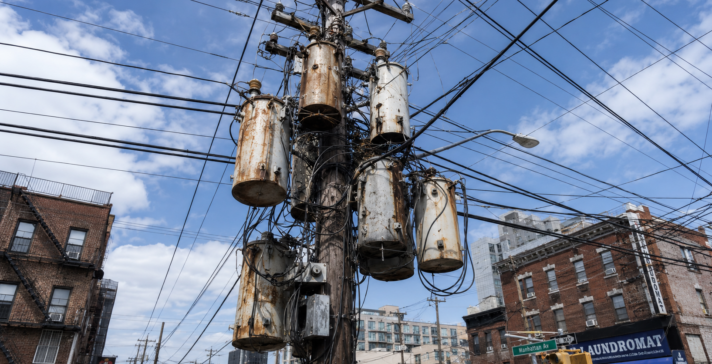
Capital is always scarcer than need. The real problem isn’t how much to invest in aging infrastructure; it’s which assets to intervene on, when, and on the basis of whole-life cost and risk.
Every network planner knows the arithmetic that never balances: the work that needs doing always exceeds the money available to do it. Lifecycle intervention spending, the unglamorous business of keeping existing assets in service through inspections, targeted rehabilitation, and timely renewal, can quietly consume half of an annual capital budget. And yet the decision about where that money lands too often reduces to a spreadsheet, a few experienced opinions, and a risk matrix that hasn’t been seriously recalibrated in years.
The instinct is to call this a budgeting problem: find more money, or buy more inspections with the money you have. From an asset-management standpoint, that framing is exactly what keeps networks stuck. The right question isn’t how much, it’s what to do, on which assets, and when, judged on whole-life cost and risk rather than on tradition or the calendar.
The deterioration spiral nobody draws on the slide
When intervention spending is under-targeted rather than under-funded, the failure mode is predictable. Proactive work slips. Assets deteriorate faster than the policy assumed. Failures climb, pulling crews into unplanned reactive work, which consumes the budget that would have funded the proactive work in the first place. Each turn of that loop makes the next turn cheaper to fall into and far more expensive to climb out of.
The mechanism is visible the moment you draw the cost curves. For any asset there is an optimal intervention point: the minimum of the total-business-impact curve. There, the marginal cost of one more unit of proactive work equals the marginal reduction in monetised failure risk it buys. To the left of that minimum you are over-maintaining and paying a reliability premium you don’t need; to the right, risk exposure rises faster than you are spending to contain it. Critically, that optimum is not a fixed date. It migrates as the asset ages along its P–F interval: the window between the first detectable onset of failure and functional failure itself. A policy frozen at “every five years” is correct only for the notional average asset. Which is to say, almost none of the real ones.
This is why two networks with identical budgets can sit at completely different points on the curve. The difference isn’t how much they spend; it’s how precisely they know which assets are approaching their inflection point. One is buying down its steepest risk gradients first; the other is smearing the same dollars evenly across a population and silently accruing a tail of assets already past their economic intervention point.
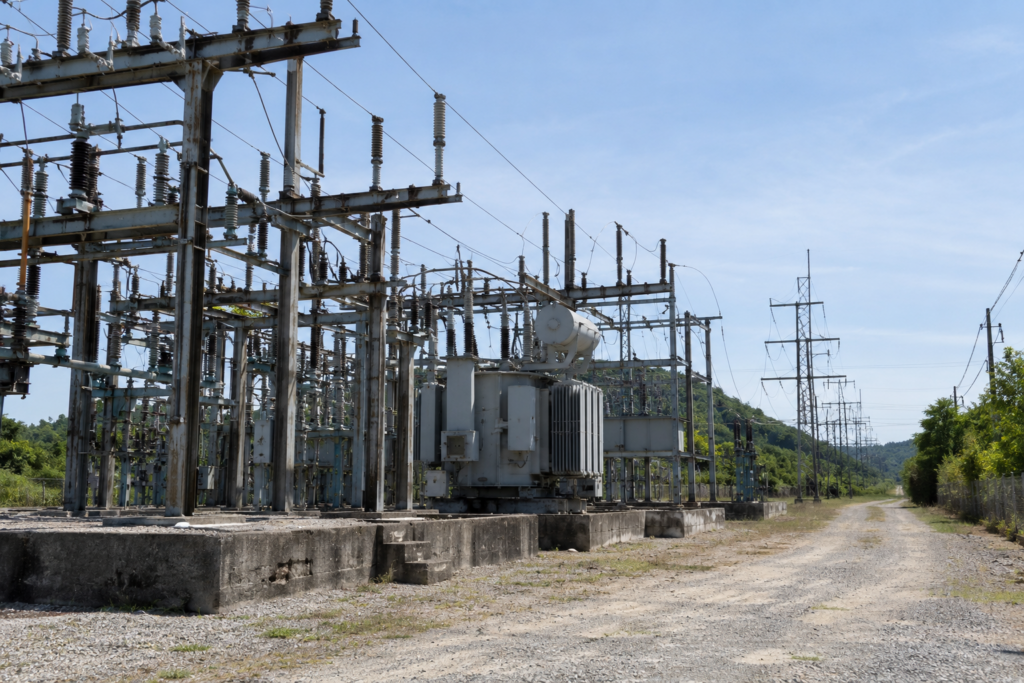
The justification regulators now demand
A second pressure has reshaped this space. Regulators increasingly want the analytical justification behind an intervention-and-renewal programme, not just the programme itself. “We’ve always inspected on this cycle” is no longer defensible when a rate case asks why a particular dollar went to a particular pole instead of an asset carrying higher risk-adjusted return. Utilities now have to demonstrate prudence, asset by asset, in a form that survives independent challenge.
How CBRM works
This is precisely the gap that condition-based risk management closes. It pays to be specific about the mechanics, because the rigour is the product.
You convert observed and measured condition factors into a continuous Health Score. That score maps onto a Probability of Failure curve, calibrated per asset type from historical failure data. Separately, you score each asset’s Consequence of Failure across network performance, safety, environmental and cost dimensions. Monetising it gives a Criticality Index. Risk Index is the product of the two.
The output is a single monetised number. UK distribution operators built this into the Common Network Asset Indices Methodology and found that number is a convertible currency: a dollar of risk bought down on a transformer is directly comparable to a dollar bought down on a cable or an overhead structure, at any voltage.
The hard part is honest about itself. Relating condition data to a true probability of failure is far harder than multiplying numbers to three decimal places. Precision must never be mistaken for accuracy. But a defensible calibration turns a ranking into one a regulator will accept.
What the math actually buys you
Once you monetise risk, the intervention-versus-renewal question stops being a philosophy and becomes a calculation. You model competing intervention scenarios and locate each asset’s economic end-of-life. That’s the year that minimises the discounted sum of replacement cost, ongoing operating and lifecycle costs, and accumulated monetised risk. Beyond that point, deferring renewal costs more in risk than it saves in deferred capital. The same model lets you test limited mid-life interventions and refurbishments that flatten the deterioration curve for a fraction of replacement cost. That smooths the renewal spikes that otherwise stack up when whole asset populations, commissioned together, reach end of life together.
The payoff is concrete. Electricity North West built CBRM across more than 90% of its fixed assets and cut roughly a fifth from its overhead-inspection overhead while improving coverage. Better information, at lower cost. Decisively, it gained the ability to show Ofgem the precise forward risk consequence of any proposed funding level. That last property matters most. The output isn’t just a cheaper programme; it’s one whose logic is traceable and auditable. Held under formal change control, it becomes institutional memory rather than knowledge walking out the door with a retiring engineer.
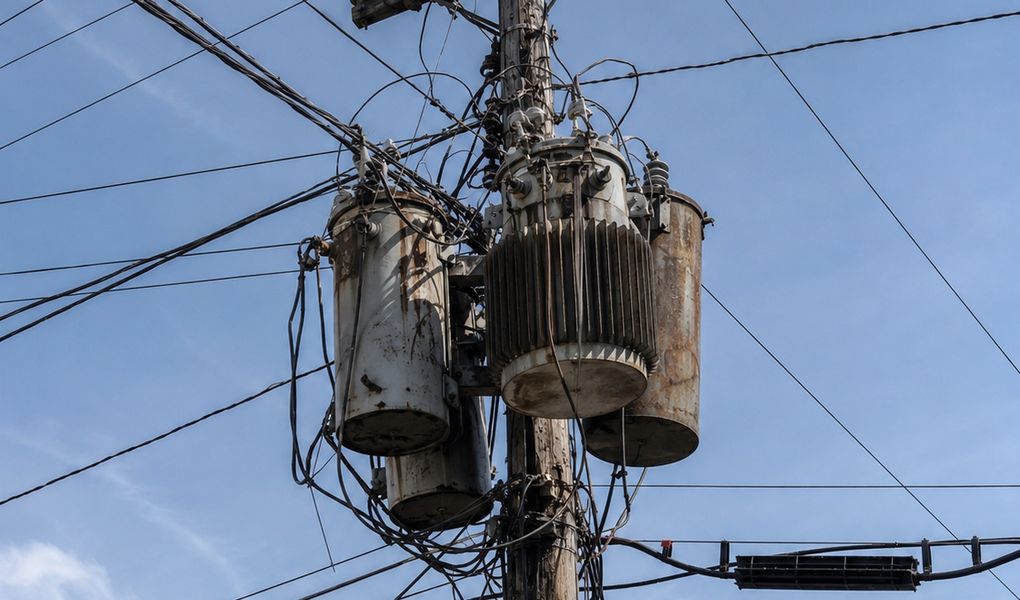
So how do you target the next dollar?
It’s a meaningfully different posture from buying more inspections or deferring them across the board. It’s about putting the next dollar where the risk gradient is steepest, and being able to show your work.
How Direxyon does this. Direxyon encodes each asset family’s lifecycle strategies (inspection cycles, intervention thresholds, rehabilitation criteria, and replacement timing) into a decision twin, then runs them through Monte Carlo projections across the whole portfolio. The output isn’t a single TCO estimate but a probabilistic distribution of outcomes under different funding levels and deterioration scenarios, a defensible budget envelope rather than a point estimate, with the economic-end-of-life year and confidence intervals attached.
This is one of five strategic questions we explore in depth in Aiming True, our 2026 analysis of capital investment for electrical networks. The chapter includes a worked utility-pole case study, the Health-Score-to-Probability-of-Failure calibration, the economic-end-of-life curve, and the resulting programme cost reduction, that you can lift straight into a rate submission.
→ Read the white paper: Aiming True: An analytical approach to capital investment
Frequently Asked Questions
Under-funded means there genuinely isn’t enough money to maintain the network’s level of service. No matter how well the budget is allocated, the math doesn’t work. Under-targeted means the funding exists, but it’s going to the wrong assets at the wrong time: replacing components that still had years of useful life, while higher-risk assets quietly degrade toward failure.
The distinction matters because the two problems have opposite solutions. An under-funded network needs a defensible case for more budget, with evidence that shows regulators, councils, or boards exactly what today’s funding level means for tomorrow’s risk and reliability. An under-targeted network doesn’t need more money at all. It needs better prioritization, so each dollar lands where it reduces the most risk and delivers the most long-term value.
In practice, most networks assume they have a budget problem when they actually have a targeting problem. Long-term simulation makes the difference visible. By modeling how assets degrade and comparing investment scenarios over decades, organizations can see whether their current budget, allocated optimally, can sustain their objectives. If it can, the path forward is reallocation. If it can’t, they now have the data-backed evidence to justify the funding gap.
A method that converts asset condition into a Health Score, maps it to a probability of failure, and combines it with consequence of failure to produce a single monetised risk figure comparable across asset types.
It lets you show, asset by asset, the forward risk consequence of any funding level, turning “we’ve always inspected on this cycle” into a defensible, auditable justification.
Asset management helps organizations move beyond reactive maintenance by connecting asset condition, risk, cost, performance and service needs into one decision-making framework. This allows teams to prioritize which assets need repair, replacement, rehabilitation or closer monitoring, while making sure limited capital and maintenance budgets are directed toward the assets that have the greatest impact on reliability, service levels and long-term value.
Enterprise Asset Management focuses on managing asset records, maintenance activities, work orders, inspections and lifecycle information. Asset Performance Management focuses on understanding how assets are performing, identifying reliability issues and predicting potential failures before they escalate. Asset Investment Planning helps organizations decide which projects and interventions should be funded over the short, medium and long term based on risk, cost, service impact and strategic priorities.
Let us show you how it works
Our product specialists will walk you through our proven approach to enhance your capital investment planning.

Explore resources

 Blog
BlogThe Question Behind Every Infrastructure Budget
Read more : The Question Behind Every Infrastructure BudgetEvery infrastructure budget comes down to one question, asked two ways: what a target level of service costs, and what a fixed budget can achieve.
 Blog
BlogPowering growth without overburdening ratepayers
Read more : Powering growth without overburdening ratepayersConnection requests now arrive in hundreds of megawatts. The hard question is who pays, and how to plan node by node before committing.
- Blog
Reliability and resilience in electrical network planning
Read more : Reliability and resilience in electrical network planningExpected value works for reliability and fails for resilience. A worked example shows how the risk measure you choose, not the investment, decides the capital plan.