Avoiding redundant capital spending through regional coordination
Published on July 15th, 2026
Two neighbouring networks, each planning in isolation, reinforce the same corridor twice. The duplication stays invisible until you model both systems as one.
Utilities plan networks the way regulators draw the boundaries: one jurisdiction at a time. That’s a reasonable way to run a regulated business. But it also wastes money in a way nobody sees. Two neighbouring systems, each planning conservatively, end up reinforcing the same corridor, holding the same redundancy, building toward the same peak. Twice.
Nobody is acting irrationally. Each plan is sound on its own terms. But the waste only shows up when you zoom out and model the assets as what they physically are: one interconnected system, not two portfolios that happen to touch.
Reliability carries a hidden over-spend
Isolated planning pushes networks toward over-insurance. If you can’t count on a neighbour’s capacity, you build enough of your own to never need it. Rational, asset by asset. But multiply that caution across every boundary in a region, and you get reliability investment that’s real, defensible, and partly redundant. The asset isn’t wasted, exactly. Instead, it duplicates capacity that already exists across a line that’s administrative, not physical.
The redundancy is hard to see because it lives where nobody looks. Each network’s planners can defend every line of their programme, because within their own frame, every line answers a credible contingency. So the duplication sits in neither plan. It sits between two plans that never landed on the same table under a shared contingency standard. The clearest case is the N-1 boundary problem: two adjacent systems each hold firm capacity against the loss of a shared interconnector, when one coordinated reserve would secure both. No internal review will ever catch it, because no internal review looks at the combined contingency set.
Two things make this harder to ignore. First, regulators. The prudence bar now reaches the framing of the plan, not just the projects inside it. So “we didn’t model the neighbouring system” is becoming a hard answer to give. Second, decarbonisation is a regional problem. The cheapest whole-life path to a cleaner grid crosses jurisdictional borders: shared interconnection, pooled flexibility, coordinated capacity. Because the renewable resource, and the demand it serves, don’t care about lines on a map.
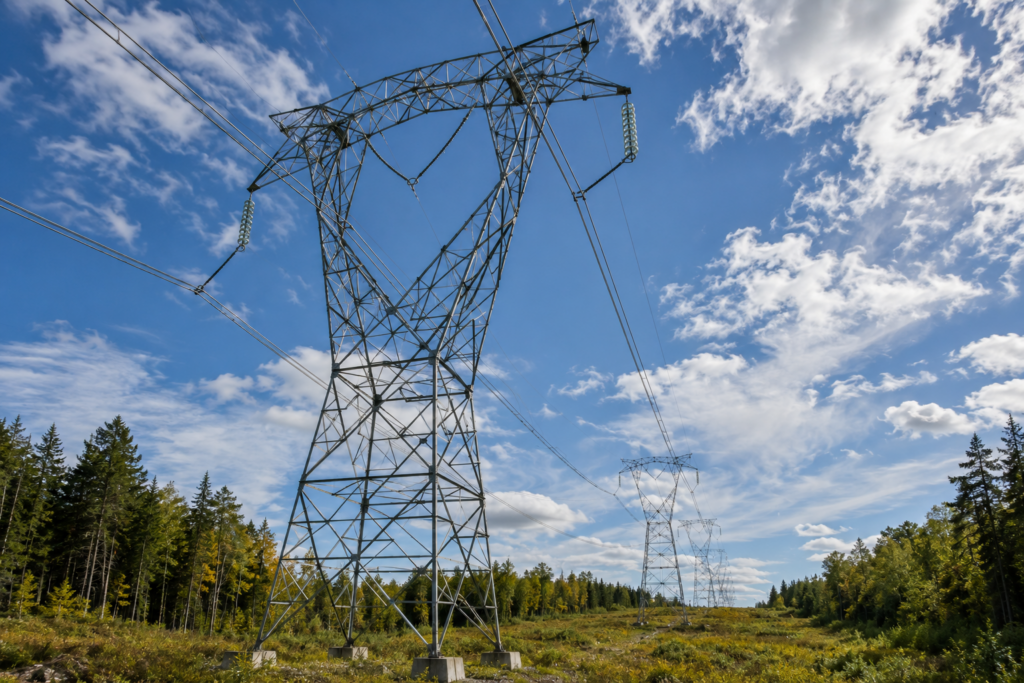
The question that’s hard to answer and expensive to ignore
The question executives are starting to ask: how much capital could we avoid by planning regionally instead of one jurisdiction at a time?
Answering it takes real work. You need multiregional modelling, shared load-flow and stability analysis, and joint production-cost and contingency assessment across territories that don’t share a plan today. Then you translate the result into present-value avoided investment. In effect, you’re simulating how power would move across a combined network, under a common security standard, across many demand and generation scenarios. And you’re putting a credible number on the redundancy that coordination removes. That analytical demand is exactly why the question goes unasked.
But not asking has a cost too: a capital programme quietly larger than it needs to be, justified entirely by the narrowness of its frame. Every interface where two networks over-build against each other is capacity customers fund twice. Across a region with many interfaces, the figure is rarely small. And it compounds every planning cycle that treats the boundary as a wall instead of a seam.
Coordination isn’t a merger
Regional planning doesn’t mean surrendering autonomy. No shared ownership, no merged control room, no single balance sheet. Instead, it means simulating collaboration scenarios, interconnections, capacity sharing, coordinated timing of major builds, and putting a defensible number on the systemic value before committing concrete.
This is asset-management discipline applied at a larger boundary. The principle that warns against optimising a single asset in isolation scales directly to whole networks: the choice that looks optimal for one asset can be wrong for the system around it. Likewise, a reinforcement that’s optimal for one jurisdiction may be redundant once the neighbour’s plan is on the table and the reserve is pooled. So optimise the programme, not the parts.
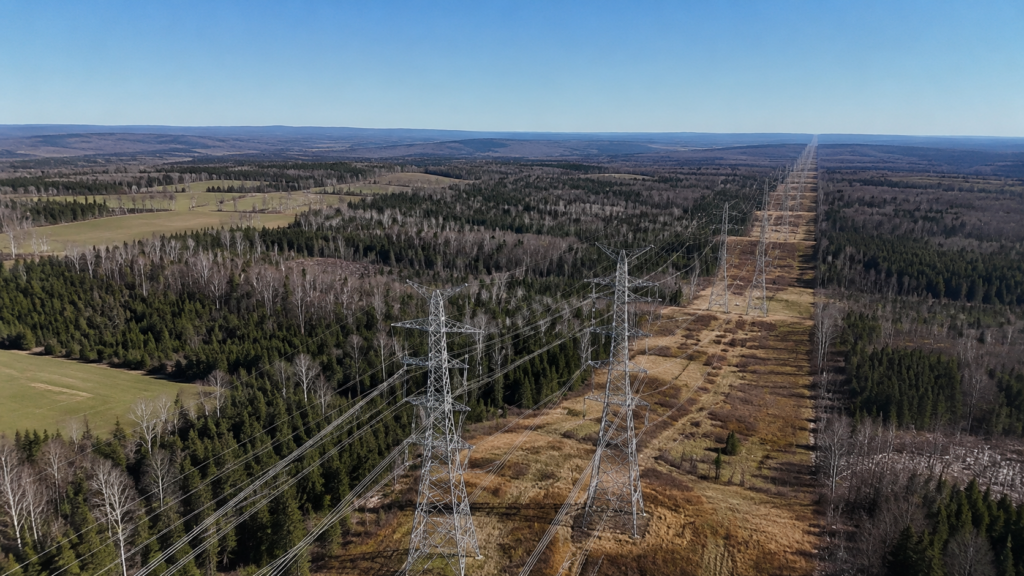
So how do you price the coordination?
The point isn’t to plan as one entity. It’s to stop planning as if the neighbours don’t exist. In other words, replace the assumption of isolation, which quietly inflates every regional capital programme, with an explicit analysis of what coordination is worth.
How Direxyon does this. Direxyon makes the cross-boundary trade-off explicit through a value-based decision framework built on multicriteria decision analysis. The framework scores capacity on both sides of an interface on the same dimensions: risk, service level, total cost, deferral value. So you can rank a coordinated reserve against two isolated ones on a single, traceable scale. And that ranking holds up in front of a regulator or a neighbouring operator, because it shows every assumption and documents every trade-off.
Monte Carlo simulation puts a number on the value of coordination, across demand, generation, and DER-penetration scenarios. As a result, the present-value benefit of a coordinated reserve doesn’t arrive as one number waiting to be contested. It arrives as a defensible range, confidence intervals attached, built from the physical constraints of both networks modelled together.
This is the third of five strategic questions we explore in Aiming True, our 2026 analysis of capital investment for electrical networks. The chapter sets out the multiregional flux-and-production modelling approach, a worked interface example quantifying avoided reinforcement under a shared contingency standard, and what interregional planning does to the rate impact customers feel
→ Read the white paper: Aiming True: An analytical approach to capital investment
Frequently Asked Questions
No. It requires no shared ownership, control room or balance sheet, only the ability to model neighbouring systems together and price the value of coordinating.
In the space between two plans that were never laid on the same table. Each plan is defensible alone; the duplication only appears when both are modelled as one system.
Two adjacent systems each holding firm capacity to cover the loss of a shared interconnector, when a single coordinated reserve could secure both.
Through Monte Carlo simulation across demand, generation and DER scenarios, with both networks modelled together. The result is a present-value range with confidence intervals, not a single contestable number.
No. Both systems are assessed against the same security standard, such as N-1, but with the contingency set modelled jointly. Reliability stays constant; the duplication is what gets removed.
The prudence test now reaches the framing of the plan, not just the projects inside it. Spend that a wider frame would have avoided is harder to defend, and customers fund duplicated capacity twice.
Let us show you how it works
Our product specialists will walk you through our proven approach to enhance your capital investment planning.

Explore resources

 Blog
BlogThe Question Behind Every Infrastructure Budget
Read more : The Question Behind Every Infrastructure BudgetEvery infrastructure budget comes down to one question, asked two ways: what a target level of service costs, and what a fixed budget can achieve.
 Blog
BlogPowering growth without overburdening ratepayers
Read more : Powering growth without overburdening ratepayersConnection requests now arrive in hundreds of megawatts. The hard question is who pays, and how to plan node by node before committing.
- Blog
Reliability and resilience in electrical network planning
Read more : Reliability and resilience in electrical network planningExpected value works for reliability and fails for resilience. A worked example shows how the risk measure you choose, not the investment, decides the capital plan.